Category: Education

  • More Learning and New Worries: Growing up Homeschooled Part 2

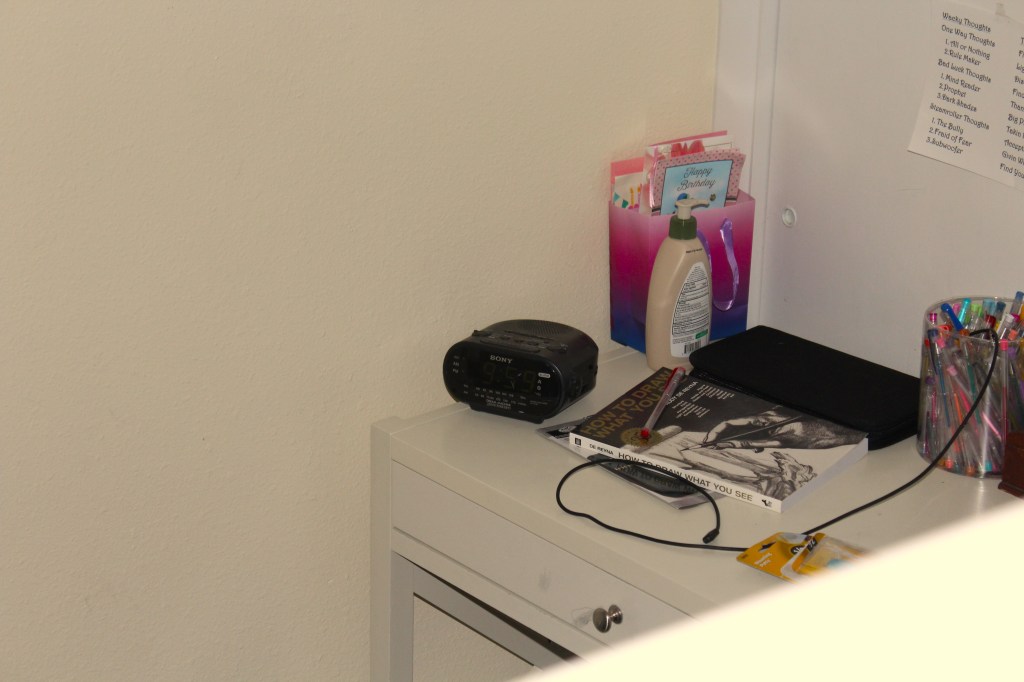
    my room in 2018 (my photo)

    Click here for Part 1

    Ages 8-12 (2013-2018)

    School(work) continues

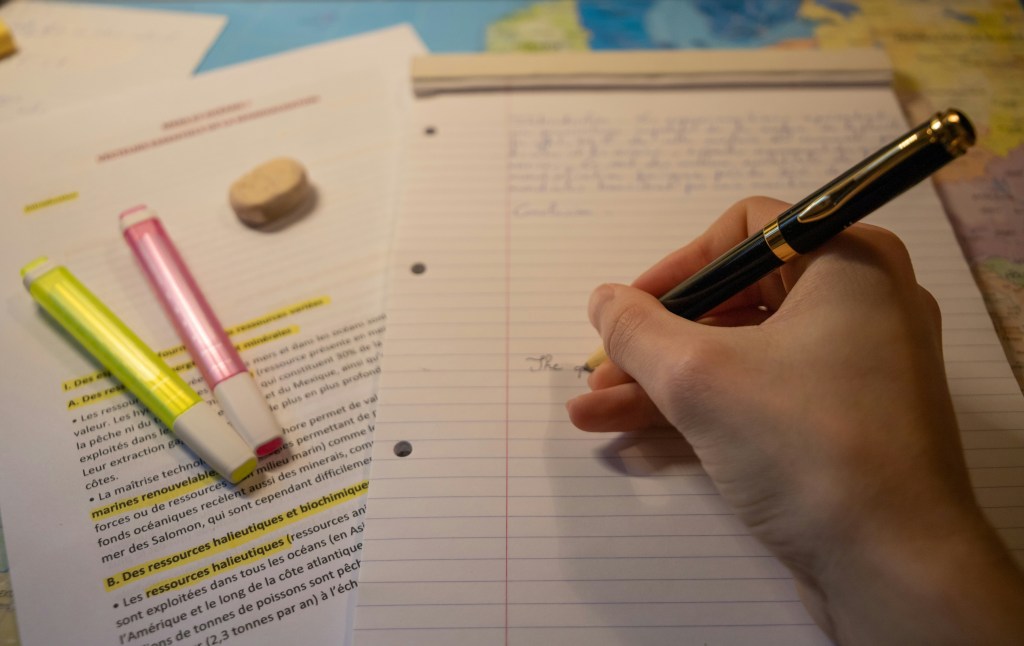
    Educationally, my siblings and I thrived during this time. My mom lived up to the demands of her role as the sole teacher of several young children. Each year, boxes of colorful new books arrived on our doorstep, and we’d each begin a new grade. There were the math workbooks with pages of problems, the Latin workbooks full of conjugations and declensions, the science books with an experiment for each lesson, and the history CDs we’d listen to in the car. Schoolwork wasn’t always fun, but sometimes I liked it. I especially enjoyed learning anything related to science or geography. I was also a devout reader. My favorite section of the library was the one that held all the historical fiction series like Dear America, about girls like me who’d lived in distant times and places. I learned through my reading. I remember identifying the birds in our yard, reading books on cat care and gardening, and going through a space exploration phase with my brother. There was so much to learn!

    My family-centered life

    If there was one thing that was true, it was that my family was always either about to move, about to have a new baby, or both. I had four younger siblings at age of eight, and a fifth one by age twelve. Our house was always busy with lots of little people running around! My dad’s military career progressed with long working hours for him, and my mom stayed at home with the full-time job of caring for and educating several young children. The frequent relocations of military life can make jobs for military spouses and school for military children difficult to maintain. My family adapted to this challenge by containing the lives of Mom and us kids within the home. A homemaker does not have to find a new job every other year. Homeschooled children can take their curriculum with them anywhere, and don’t have a school or teacher, or classmates that must be left behind. And so, that was our life for many years. My family-centered life was mostly happy. Mom had us on a routine: breakfast, morning chores, schoolwork, lunch, playtime, maybe some errands, dinner, evening chores, TV time, and bed. We were all so young and close in age that we were treated like one big group of kids. As an oldest daughter I will always be grateful for this. I was close with my siblings and can still remember the games we made up together. Homeschooling gave us lots of free time during the day. In the evening, Dad would come home from work, and we’d be excited to see him. My parents got along, and our family system stayed stable.

    Venturing beyond the home

    One significant difference between homeschooling and traditional school is this: as a homeschooler, you don’t have leaving the house built into your schedule in the same way that your traditionally schooled peers do. Every errand, every activity is something extra for mom to accomplish. Until I was thirteen and allowed to stay home alone, leaving the house meant accompanying mom on all her errands. I didn’t mind though. I was a weird kid who liked the grocery store. Mom would usually buy snacks for my siblings and I to eat as we followed her around the grocery store, so our weekly shopping almost felt like a fun outing. It was interesting to look at all the stuff on the shelves, and because we went there so regularly, the grocery store became a comfortable, familiar place. So was our local library (of course), playground, and the church where our co-op met. At eleven, I did a girls’ science class, and the next year I played YMCA soccer. At eight, my speech therapist was a regular part of life, and at twelve, I spent time at the doctor’s office for my mom’s prenatal appointments. Dad liked outdoor activities, so on the weekends we’d go hiking in the Virginia woods or camping in the Montana mountains. This all was my life outside of the home. Besides our house, the stores, parks, libraries, and co-op buildings were the places I missed after every move, and the places that hold my nostalgic childhood memories today.

    Friends? Aren’t those just kids you see sometimes?

    I always thought that I had enough friends. I did weekly activities, after all, and there would usually be some girls my age I’d talk to. If our moms happened to be friends, we’d even see each other outside of activities. I even got invited to sleepovers and birthday parties. These social events were rare, special occasions. Friends moved, we moved, homeschool groups changed, and social opportunities shifted from year to year. People drifted in and out of my life. Looking back now, I’m not sure if any of my relationships went deeper than friendly acquaintances. I pretty much considered any other kid I saw repeatedly, talked to, or even just did activities near to be my friend. Maybe that made me socially behind, but if it did, I didn’t know that. I was content with my social life. I liked the other people I knew and looked forward to the times I got to see them.

    Being homeschooled is my normal

    I still didn’t think much about the fact that my siblings and I were homeschooled. We just were. My parents never did or said anything to suggest that attending a traditional school was even within the realm of possibility for me. Sometimes I heard them speak vaguely of possibly putting us in school far in the future, when my dad retired from the military. I wasn’t sure if that would really happen though, and besides, I could do the math. I would be eighteen by then. I continued to enjoy stories where the characters went to school, in the same way you might enjoy a story set in a time and place far away from your own life. I had an idea that no matter what the books and movies said, real-life public school would be bad. Or perhaps I would be too sensitive to handle it. I never thought of going to school. Why would I have? After all, I had a good family, and good life as it was.

    Undiagnosed anxiety disorder

    As a young child I had always been what my mom called “high-strung”, easily getting overwhelmed and frustrated by my surroundings. However, once I got calmed down, it was over. There was no prolonged underlying anxiety about serious matters. This changed rather abruptly for me around the age of eight. I don’t know where it came from, but I was suddenly absolutely terrified of not being saved. For several months I even convinced myself that I had somehow run out of chances to be saved. The year before, in second grade, my mom had read the Bible out loud to my siblings and I as part of our schooling. I vividly recalled her talking about people running out of chances to get saved and how it is a sad day when that happens. Upon my “confession” several months later, mom was confused that I thought this and had no memory of ever saying such a thing. Maybe I had misunderstood her words that day. We searched in vain for the Bible verse that had worried me. To this day I know of no verses that say people can “run out of chances” to get saved. Mom told me that Satan must have been lying to me, and we said the prayer of salvation together. I finally felt a sense of relief.

    Afterwards, the anxiety faded for a little while. But soon, I felt a new desire to read my Bible, my King James Bible with its tiny font that I’d received on my eighth birthday. Not just a little bit, but chapters every day. This might seem like a positive desire for a newly “born again” Christian, but for me it became problematic. My symptoms resembled religious OCD. See, If I didn’t read it, I felt guilty. This guilt ruined my enjoyment of many games and activities. I created elaborate reading plans and had to say my prayers in a specific way for them to be right. I was afraid of hell, demons, not really being saved (still), and the second coming. I also worried about other things like getting sick or dying, but most of my worries were religious. My largest influence by far was the evangelical Christian beliefs my parents taught at home. Our family’s church attendance was sporadic, even at the height of my anxiety. I didn’t have a true faith community for most of my childhood. Like the rest of my life, my religious struggles were something private and home-centered.

    Did my parents notice my mental health struggles? Yes, they did, and they actually tried their best to support me. It was never their intention for me to be so anxious over our family’s faith. They bought me children’s books on anxiety and even an entire program on CD called Turnaround. Doing the exercises from this program helped even if they did not cure my anxiety. I still have some of it now, even at the age of 21. However, I was fortunate enough to outgrow the worst of the panic attacks and obsessive-compulsive symptoms in my teen years. Somehow puberty had a stabilizing effect on my moods! I certainly did start to feel different after I became a teenager. Which leads into to the next segment of my story…

    Click here for part 3

    Click here to share your own homeschooling story on this website
  • Why Community Colleges Are an Excellent Choice for Homeschoolers

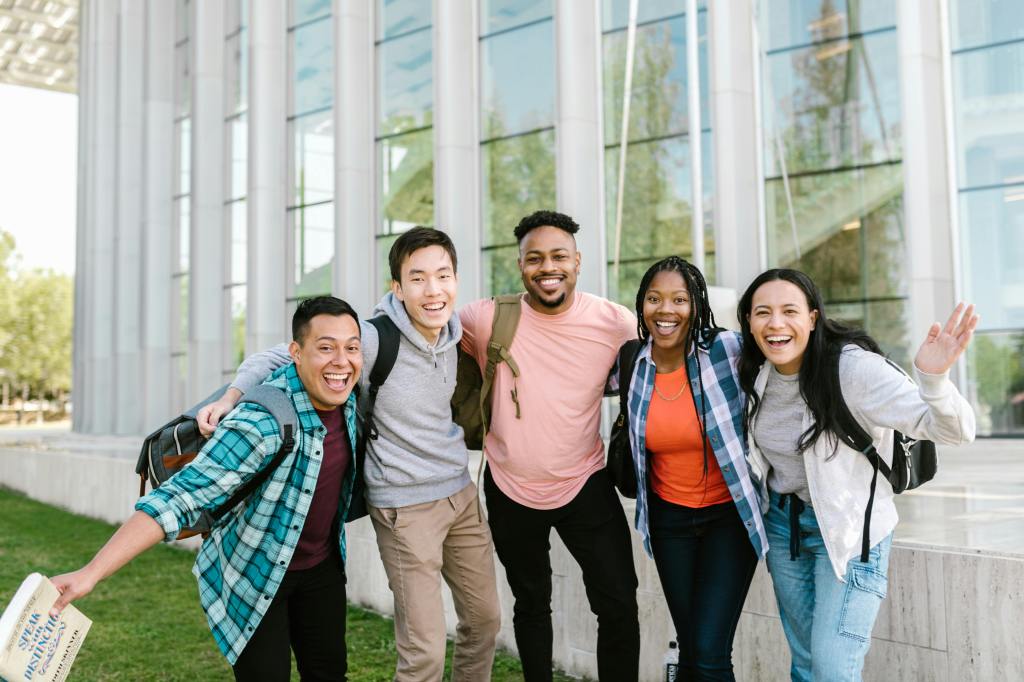
    Photo by RDNE Stock project: https://www.pexels.com/photo/group-of-people-standing-beside-a-building-7683745/

    Author: Steven

    In this article we will be examining why community colleges can be a great fit for both current homeschool students who desire opportunities for college credit via dual enrollment as well as former homeschool students who are past the typical high school age. Despite their at times negative reputation from the general public, community colleges offer several benefits for students who come from a homeschool background. 

    Community colleges offer excellent opportunities for personalized learning.

    Community colleges offer smaller class sizes than one will find at many large universities, especially for entry level courses. This article by Crown Counseling, explains that the average class sizes in community colleges tend to range from 25-35 students, while similar offerings at larger universities can be over 300. Given that most community colleges offer the same introductory (college freshmen and sophomore level) courses that universities do, one can get more out of them by being part of a smaller environment with instructors who are able to connect with each individual, rather than just being one face in a sea of many. 

    Similarly, community colleges also allow for different models for students to take classes, including in-person options during the standard school day timeframe, as well as evening and weekend options. Community colleges also offer plenty of opportunities for online and hybrid (mix of in-person and online) learning, with this article by Sara Weissman of Inside Higher Ed noting that online learning options have remained popular with students even after the Covid-19 pandemic subsided. This can open doors for you to start your college career without having to travel to a physical campus, which can be a major benefit for you depending on your situation. With that being said, if you are someone with a homeschool background who is interested in pursuing collegiate studies I would very strongly encourage you to do at least some of your classes in person. There is an element of connection with instructors and classmates that simply cannot be replicated virtually, and it can be especially helpful in courses in the STEM fields. I am a K-12 homeschool alum myself who earned a bachelors degree completely online and I am now back in school in-person (at a community college) to go into the medical field, so I am speaking from personal experience when I am making this recommendation. 

    Community colleges are significantly more affordable than public or private universities.

    One aspect of community colleges that many people do not realize is how affordable they can be when compared to other higher education options. In this article from the American Association of Community Colleges we find some average annual tuition costs for full-time students at different types of institutions for the 2023-2024 academic year:

    • Public 2-Year Colleges In-District (Community Colleges)-$3,990
    • Public 4-Year Colleges In-State ($11,260)
    • Public 4-Year Colleges Out-of-State ($29,150)
    • Private 4-Year Colleges ($41,450)

    As one can clearly see from this data, community colleges are the most affordable option in higher education by a long shot, especially when compared to going to school out-of-state or going to a private university. I have often suggested to people I know, homeschoolers, public schoolers, and private schoolers, that unless they have rich parents, a full-ride scholarship, or significant money from both scholarships and grants, starting out at a community college will be their best option financially. In addition, many community colleges offer plenty of scholarships and grants, which are financial aid options which you do not have to repay (unlike loans) which can help you fund your education. 

    Community colleges can help you if you come from a unique academic background or if you need remedial courses

    Many community colleges have a policy of open enrollment, which means that they accept anyone with a high school diploma or GED, as this piece by Sarah Wood of US News and World Report explains. Community colleges do not have the same competitive application cycle that other college and universities do, with many of them placing more emphasis on their own placement tests than they do on traditional college readiness standardized tests like the ACT or SAT. For example, if you test into needing to take a remedial math class but you are fine on everything else you can take a remedial math class while also taking college level English and History classes. Also, if your parents did not provide you with a high school transcript or diploma (4-year colleges and universities want both for admission directly from high school) then you will find that many community colleges will have programs to help you earn your GED before moving onto college level coursework. 

    In summary, I believe that community colleges are an excellent option for both former and current homeschoolers to further their education. I am someone who has been a community college student multiple times and I have found the instructors and material in them to be as rigorous and beneficial as in other academic settings. The benefits that they possess on the fronts of accessibility, affordability, and accommodation are significant. Whatever you might want to get out of your higher education journey, I strongly encourage to consider beginning it at your local community college. 

  • Navigating High School: My Advice for Homeschoolers

    Author: Grace

    Photo by Benoît Deschasaux on Unsplash

    As someone who has been out of high school for a few years, I have had time to reflect on my homeschooling experience. Much of it was good, but I definitely could have done better at some things. So, I wanted to share some advice for homeschooled teens.

    1. Make sure you’re prepared for whatever you want to do after high school.

    This is something in which I succeeded. I knew I wanted to go to college (and thankfully my parents supported this), so I completed four years of high school level math, science and writing to be academically prepared. I took SAT prep seriously, because getting the highest score I could would help prove my merit in college applications and make more scholarships available. Extracurriculars such as orchestra and volunteering were also useful. The only thing I regret is not taking any dual enrollment courses. At the time, I was not motivated to do this, but now I see that the practice with time management might have made me more ready for college.

    Before you graduate you should:

    • Make sure your parents are keeping a record of your schoolwork, grades, and extracurricular activities. No matter what you want to do, you should have evidence of your high school education!
    • Look up what the high school graduation requirements are where you live, and what is needed to pursue whatever higher education or training you may want to in the future.
    • Consider taking an SAT/ACT/GED test. I was able to register online to take the SAT at a public school. If you want to go to college, you will very likely need one of these.
    • Consider taking community college courses or something else that will get you experience in a traditional classroom setting.

    2. Learn from various sources

    I am grateful to have had access to the internet and the local library. This helped me expand my knowledge beyond only my assigned homeschool materials. For example, astronomy books I checked out from the library discussed the big bang while my high school textbook didn’t. Everyone has biases, so make sure to explore both sides of issues.

    3. Don’t be too isolated

    I could have done better with this. During the school year, I attended activities 2-3 times a week but never made close friends. More activities may have made friendships easier, but I didn’t know what else was available. I wish I’d been more outgoing and tried to arrange more get-togethers outside of co-op. There were a few families I knew that actually lived in my neighborhood, but I still didn’t go over to their houses very often. It felt awkward, but I wish I’d tried harder.

    It is possible to become isolated as a homeschooler. I’m not stereotyping homeschoolers as weird and unsocialized here; I’m just pointing out that socializing can require more effort when you are not in a traditional school. As a teen, I noticed that my mom never seemed to mind when activities were cancelled, as she was already busy taking care of a large family. I don’t think my mom is an anomaly among homeschooling parents either. During the pandemic, my homeschooled pen pal told me that her mom was happy she couldn’t be late for anything. Because there was nothing to be late for anymore! Stay-at-home parents sometimes just want to stay home, but being a stay-at-home teenager is not ideal. You should have free time to interact with others your age multiple times per week. Looking back now, I see that only one of my activities (co-op) allowed that, and that was only 2-3 times per month. My other activities either only had younger kids (American Heritage Girls) or weren’t meant for socializing (orchestra). I should have had more social time than that, and I should have listened to my feelings of not quite having enough. Advocate for yourself if you ever feel bored or lonely! And if that remember that even if you’re isolated now, you will have more freedom to go out into the world eventually.

    4. Consider your options.

    Plan your future! Research colleges and jobs and find out what it takes to apply. If there is anything in your current life you are unhappy about, you can at least try to find other options. Research extracurricular activities in your area. Some things you could try are libraries, community centers, scouting programs, homeschool groups, youth sports and summer camps. If you have a specific interest in doing something, look it up. If you are interested in switching to traditional school, research schools in your area. Even if you are already partway through high school, it is not too late to try something new if you think it might benefit you. One of my biggest regrets is that I was somewhat passive as a teen and accepted situations that could have been improved to make my decent homeschooling experience even better.

    5. Final Advice

    Finally, if you are struggling with academics or your home life try visiting the Coalition for Responsible Home Education website to find some advice. I just wanted to put this out there because I don’t know what your circumstances are, and I recognize not everyone has supportive parents like I did.

    This is just what I’ve learned based on my personal experiences and research, and hopefully it’s useful to some of you readers. It is important to take advantage of the potential benefits of being homeschooled, while minimizing the potential downsides.