Tag: homeschooled teen

  • Stuck In-Between: Growing Up Homeschooled Part 3

    image my own

    Click here for part 1, part 2

    Ages 13-15 (2018-2021)

    A transitional period

    If there was one thing that was true about my family it was that we were always either about to move, about to have a new baby, or both. The year I turned thirteen we did both. My little sister was born, and several months later we moved from Montana to Texas. I’d come to love our little city in Montana and wished we didn’t have to leave. This was also a hard time for me because I was growing up and dealing with many mental and physical changes. All of the sudden, my body was different, my thoughts were confused, and I had questions I wasn’t sure were appropriate to ask. I didn’t have a strong sense of who I was or what I could even do anymore. I was not a loud or rebellious teenager and never got involved in drama. I lived a quiet life and may have even seemed mature for my age. What defined my teen years was a persistent, awkward feeling of being in-between, like I wasn’t the age I should be.

    My secret curiosity

    Around this time, I secretly became curious about school. This curiosity did not come all at once, but through a series of random little incidents such as the ones I list here.

    • My homeschool group held a track meet at the middle school I would’ve been attending, all the kids came out for recess, and my parents made remarks about it looking like a prison yard.
    • Mom gave me a book from her childhood and said that she knew I had a very different life than she did in middle school, but she hoped I’d still like it. I thought my life must be better right? but was also fascinated by the experiences the characters had with starting junior high and forming a friend group.
    • We watched a movie about a homeschooler going to school. It wasn’t always easy for him, but his school still looked nice.
    • I found my family’s books on homeschooling, and learned that unlike public schoolers, I was apparently learning to think critically and had no unnatural attachments to my peers.
    • I also found my parent’s old high school yearbooks, which made school look almost fun.
    • My mom talked about hypothetically putting my siblings in school when the moving finally ended. I thought our family would do that? but realized I’d be too old then anyways.
    • I was at the playground with my mom and siblings when a school nearby let out and the park flooded with other kids. It was interesting to see them all.
    • In 2020 I watched my neighbor’s graduation ceremony held on their front porch. I knew it was sad that they didn’t get a proper graduation. But I also thought hey, I bet my graduation will look like this anyway. I pitied the kids missing out on senior year while knowing that I wouldn’t have that experience myself.

    As you can tell I had an extreme amount of cognitive dissonance during this time. I was so grateful to be homeschooled, have lots of free time, and not be in those oppressive public schools, but if I’d been told I now had to attend those same schools, I probably would’ve been excited. I had no idea what I wanted. Deep down I suspected that public school would not be a real option for me anyways. Regretfully, I never said a word about these thoughts to my parents. I wonder what conversations we could’ve had. For example, mom has since told me that even she took those Christian homeschooling books we owned with a grain of salt. How could I have known that as a thirteen-year-old? I was just a kid becoming aware that I was different and looking for something to explain my own life to me.

    Too old

    I hated being thirteen. Nothing particularly bad happened to me then, and my family life continued much as it always had. But I still hated it. I didn’t like having a growth spurt, I didn’t like having my period, and I didn’t like being too old to enjoy the things I once had. Sometimes I still tried to join in on the games my siblings played, but it just didn’t feel the same anymore. So, I did my schoolwork, helped with chores, and then came the awkward in-between time. My younger siblings and cousins played on playgrounds marked for ages 5-12, while I paced around the park collecting acorns, or sat awkwardly near the adults while they chatted. One evening a week, I went to a Christian scout-type program with a few other girls my age, and sometimes my family attended a church with a youth group. I liked these outings and found the other kids fascinating even if I didn’t fully know how to interact with them or be part of the group. Reading was still a passion of mine, but I rarely even met another kid my age in the pages of a book. The characters all seemed to be twelve still, and I just had to be thirteen.

    Increasing connections

    Fourteen seemed like a luckier age for me than thirteen had been. My family moved again, but this time we stayed within the same city, and it felt like a positive change. A nice house opened up in military housing, so we took the opportunity to move on base. Dad no longer had to put up with a long commute, and we all liked our new home that came with the amenities of living on base. The surroundings felt familiar and almost nostalgic to me as I’d lived on or near bases when I was younger. I enjoyed meeting the neighbors who were also military kids and understood my lifestyle. Another positive development was my mom finding more homeschool activities to join. In addition to the scout-type program I’d been in the year prior, I was now part of two new activities. The co-op had enough fourteen-year-olds that we could do an actual ninth-grade biology class together. The homeschool band was something that I never would have thought of on my own, but mom encouraged me to try it. To my surprise, I discovered I was capable of learning an instrument, and I still enjoy playing my flute to this day. Three activities every week! That was the most I’d ever had. As a young teenager I loved this and began to put more effort into my social interactions than before. I hung out with the other older girls at the park after co-op, went on campouts with my troop, and got invited to a few parties. The homeschool community my family found was welcoming and kind. I still remember the people I knew during that time fondly. For a little while, I sort of had a social life.

    Did everyone become like us?

    New Years came and it was a new decade. I had no idea what the next ten years would be like, but so far, the beginning of 2020 seemed like the continuation of a good time for me. Even the weather was nice (mild Texas winters are a break from the heat). In early March, some of my siblings and I had a lot of fun at a troop camporee where there was facepainting, cake decorating, and time spent with our friends. We left early though because Dad was suddenly busy with work and Mom had to return home to watch the other kids. It turns out Dad was busy because he had to help make a plan for how the base would respond if this new virus we’d all heard of became a problem in our area. Of course, we were on the brink of witnessing the worldwide COVID-19 pandemic spread to the United States.

    The pandemic was a global tragedy that affected everyone, and I know there were many families who were worse off than ours during that time. Quarantine came with massive costs to children as schools were shut down for an indeterminate amount of time. Suddenly every family homeschooled. I remember my dad commenting that we kids were normal for the first time in our lives. But were we? What did it mean to be a homeschooler during the pandemic, not just a pandemic homeschooler? First, unlike many children, my siblings and I were fortunate that our academic progress was not interrupted at all by quarantine. If anything, we had more time to do schoolwork. Second, although we already spent most of our time at home, being completely stuck at home was still a strange experience. Not having those activity days to look forward to each week felt like having the having the rug pulled out from under me. Zoom meetings weren’t enough. I never thought I would miss mundane things like shopping and library trips so badly. One thing that helped was that our neighborhood had access to a path and a lake. Sometimes Mom would take us kids out for what we called a “pandemic picnic”, so at least we got some fresh air.

    For me, a third aspect of being a homeschooler during the pandemic was being part of a community that reacted to the risks of COVID-19 differently than mainstream society. In the spring, the world was shut down, and it was clear that we were living through a global emergency. I remember watching the news and seeing footage of deserted city streets, and rows of tents set up because the hospitals were full. I understood that this was serious and that of course my family had to stay home so we wouldn’t get sick. But we also lived in Texas where the quarantine regulations were lax and not everyone believed they were necessary. By May, my family was going to state parks and even visiting my grandparents. I heard that this thing I had been truly scared of only a few months before was actually no worse than a cold or flu. This was confusing because even if some people had mild cases, weren’t others actually getting sick and dying? Still, over time I began to feel that perhaps the situation wasn’t that serious after all, because that was how all the adults in my life were behaving. Then, I found out that the regional summer camp my scout-type organization ran was still happening. Yes, leaders from troops across the south decided to run it the summer of 2020. I hadn’t expected to go to camp that summer, because obviously there was a pandemic (right?), but then I did. Although I enjoyed some parts of it, I still had a vague sense of uneasiness, especially when eating meals in the crowded main hall where no one was wearing a mask. If I was exposed to COVID then, I didn’t get noticeably sick, but looking back I’m a little shocked that I participated in a pandemic summer camp. And I will note that many of the girls there were homeschooled. That was a weird time.

    Overall, homeschooling meant that I didn’t even experience a once-in-a generation crisis the same way most of my peers did. I stayed in my niche subculture while they gradually transitioned back to in-person schooling. Everyone else had not become like us long-term homeschoolers. By January of 2021 I was fifteen-and-a-half years old, my family was preparing for another move, and I still felt stuck in-between.

    Click here to share your own homeschooling story on this website

  • On the Benefits and Limits of Homeschool Co-ops

    https://pixabay.com/images/download/publicdomainpictures-children-14067_640.jpg

    Author: Grace

    Introduction

    Growing up, I always looked forward to co-op days. Co-op was a little slice of life outside the home. It had the possibility of friends and was a place where like-minded families came together for activities that would be hard to do alone. Thanks to my co-ops, I learned photography, played the ukelele, gave speeches, and did dissections for high school biology. I had people I looked forward to seeing, and whom I still remember fondly to this day. In many ways, the co-ops we attended provided an enriching experience for my siblings and I, one that we were undoubtedly better off for having had.

    Co-ops are a resource commonly used by homeschooling families like mine. In 2025, the Johns Hopkins Homeschool Research Lab conducted a survey of over 2,400 homeschooling parents in the U.S. In it, 88% of parents reported using outside resources to supplement their children’s learning, and 29% specifically reported using co-ops. This allows for rates of co-op attendance to be estimated at about 1 in 3 American homeschooling families. Apparently, many homeschoolers find co-ops to be a resource worth using, and I agree that they can indeed be a valuable addition to homeschool life.

    Sometimes I still wonder though: are co-ops really enough? It may seem odd that someone with good memories of co-ops would even ask this question. However, now that I have grown up and left the world of homeschooling, I can see some flaws in the homeschool lifestyle. I wish to discuss then. After all, how will future generations of homeschoolers know what to improve if alumni do not share their perspectives? So, this will be a somewhat critical article on weekly homeschooling co-ops. I will argue that if we mean “enough” in the sense of providing adequate social opportunities and academic enrichment for homeschooled students, then no, co-ops are not enough by themselves. They are limited in what they can provide as they are constrained by time and the pressures of family life. They are a starting point to enrichment, not an end in themselves.

    Social Limitations

    The largest social constraint I have noticed in homeschool co-ops is a simple lack of time for interaction. Because they are intended to be supplemental and not a child’s primary source of education, co-ops spend much less time in session than traditional schools. They commonly meet once per week, possibly less, with years that may be shorter than a traditional school year. While children in school will be around the same group of people five days a week as part of their normal routine, homeschooled children may only get one day a week with a specific set of people. Furthermore, that one day is for an activity that is not essential to their family’s functioning, and in fact just creates more work for the parents. Co-op is easy to miss due to sickness, scheduling conflicts, or parental burnout. I personally missed multiple times as a teen due to younger siblings being ill. And if a family skips a week, they will likely have at least another one to wait before seeing their co-op friends again. All of this means that a child in a co-op may end up feeling that their time to form friendships is limited, and that access to their social outlet is inconsistent and precarious.

    Another social limitation of co-ops is that they can lack diversity. By their very nature, they only include homeschoolers who voluntarily join and are not a representative sample of the local community at large. Often co-op leaders are even selective about which type of homeschooler is admitted and end up creating a little social bubble full of families with similar religious and political beliefs. I have seen this process unfold firsthand. Several years ago, my large family had just moved to a new state, where we were lucky to find a little co-op that welcomed us in the middle of the semester. Within the next few years that co-op grew in size, space became limited, and the leadership established a stricter vetting process for new members. This included a mandatory statement of faith and a lengthy review by the board members. They found social media posts they didn’t like? Rejected. There was a rumor about one of the children in a family? Rejected. A parent couldn’t commit to leading a class due to medical problems? Rejected. The judgement and exclusivity of some homeschool moms went far beyond practical considerations for co-op membership. And the result was a co-op that was very conservative, evangelical and very white as a natural result of selecting for the first two things. It did not allow kids to interact with people from a variety of backgrounds, nor did it allow them to explore outside ideas. As a teen who was beginning to internally question some conservative ideas, I felt I could not say all my thoughts out loud. And I recognize that my family was welcomed into many of our co-ops because we were conservative Christians. I know of other homeschoolers who struggled to find a homeschool group because of strict membership requirements. The lack of diversity within some co-ops means that some kids are not learning to interact with people different than them, and others are shut out.

    Academic Limitations

    Lack of consistency and time can also affect the academic offerings at co-ops. I don’t deny that they can provide excellent academic enrichment when the circumstances are right. When I was in ninth grade, I was enrolled in a co-op that had several other students my age, and parents willing to teach high school biology. We did our textbook readings as homework, then came to co-op for the labs and class discussions that we couldn’t do at home. It worked well for everyone. Well, except for the co-op’s sole older high schooler who’d already done biology. And it was a wonderful opportunity- for the year it lasted. I had no co-op chemistry class the next year, nor physics the year after. The rest of high school science was reading a textbook alone in my room. Co-op membership shifts, teachers come and go, and the class offerings of a co-op vary from year to year. This is perfectly fine if you’re looking for fun extracurricular classes like painting or robotics but makes the co-op an unreliable source for core academic subjects like algebra or high school chemistry.

    Parents vs. Children

    Although a co-op exists to provide activities for homeschooled children, it is ultimately an organization run by and dependent upon homeschooling parents. Not that this is inherently bad- it is unavoidable that much of what a child does will need to be facilitated by adults anyways. Still, it is important to recognize that parents and children play distinct roles in a homeschool co-op. If co-op leaders treat the experiences of themselves and their children as one and the same, they risk their co-op becoming more accommodating to the social needs of the adults than those of the children.

    A homeschool mom who joins a co-op is the one with autonomy, the one with transportation, the one with control over how her family socializes. She can seek out a community with like-minded adults in a similar stage of life. She has free access to electronic communication with her friends and full control over arranging get-togethers outside of co-op. Yes, it’s still possible she could struggle to make friends, but as an adult, she has a level of control over her social situation that her children do not have over theirs.

    I think that co-op parents can even get more social time than their children. One co-op I attended had a free period for moms to hang out in the break room and drink coffee together. Meanwhile the kids were in class, where much like in a school, we were expected to pay attention and not just talk the whole time. I loved class, and that was a very reasonable expectation, but it still led to slightly less social time for us kids. In another co-op my mom joined the board, which held meetings where parents got together, dealt with administrative tasks, and spent a lot of time talking. Of course, I understand that the board meetings were necessary for the co-op to function. It’s just somewhat ironic to think of all the moms laughing and chatting while the teens of the co-op were apart. All of those hours were spent planning classes that would only meet about ten times, so that the students could have their mornings together a couple times a month.

    It’s no wonder that the social landscape of a co-op can be a bit challenging for a student. The other kids enrolled in a co-op have a wide range of ages and personalities without the common identity of something like “Christian Homeschool Parent” to bind them together. A 40-year-old mother may easily befriend a 45-year-old mother, while their daughters aged 10 and 15 struggle to relate to each other on the same level. And a homeschooled kid had better hope that the peers they connect with at co-op happen to also be the kids of mom’s friends. When my family met up with other families, sometimes one sibling’s friend would be there, sometimes another’s, while the other kids would all sit around awkwardly. We were always seeing one of mom’s friends though. Overall, it is possible for the children in a co-op to have less opportunity to feel connected with people of a similar developmental stage than their parents do.

    Conclusion: How to Properly Use Co-ops

    Co-ops are a starting point to social and academic enrichment, not an end. They should be supplemented with other activities and resources. Something that can help mitigate the shortcomings of the weekly activity model is being involved in multiple activities at once, with overlapping families if possible. Parents should also arrange frequent get-togethers outside of activities that center on their children’s friendships. If they’re searching for additional academic support, they can look into everything from online classes, to tutors, to community college for teens. Most importantly, parents can simply ask their kids to share their perspective. Are they happy, are they bored, is there anything else they want to learn, do they feel they have true friends? Is there something going wrong in their life? Just ask! Make sure they feel understood and connected with other people.

    None of this is said to discourage participation in co-ops. I still maintain that they can be a wonderful addition to homeschool life, and that raising awareness of the potential pitfalls associated with them is for the good of homeschooling and homeschooled children alike.

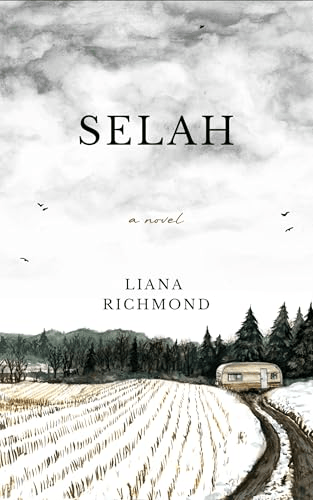
  • Selah by Liana Richmond: Inside the World of Fundamentalist Homeschooling

    https://m.media-amazon.com/images/S/compressed.photo.goodreads.com/books/1763842806i/244304197.jpg

    Selah is a novel by author Liana Richmond, published by Agathos press in 2025. Although the main character is sixteen, there is no indication that it was published as YA, and it seems to be literary fiction geared towards mature readers. Besides simply being a well-written story, Selah will be of special interest to anyone interested in the world of fundamentalist homeschoolers. I have tried to write this review without too many spoilers, so that anyone who is interested can go read Selah’s story for themselves.

    The end shouldn’t hurt me. I would be whisked away to Heaven. The future shouldn’t hurt but it did (5)

    Selah Bowman never expected to grow up. Her parents live in expectation of the imminent Second Coming, having chosen to divest themselves of worldly things. Since even small-town Ohio is deemed too worldly, Selah and her sister Chalice are kept in a tightly controlled bubble. They are homeschooled and faithfully attend their local independent Baptist church. Any outside media or activities are heavily scrutinized and liable to being withheld at their father’s disapproval. And their father always has the final say as head of the household. Selah’s somewhat lonely existence is haunted by visions of the final judgement, and even mythical creatures that do not fit in her Christian worldview. She finds solace in art until her parents discover her notebooks filled with anatomical drawings. Shocked and horrified, they are desperate to fix whatever led their daughter astray. So begins the end of Selah’s sheltered childhood. Soon, she will be forced to question her beliefs and the only life she has known. It will be the hardest thing she has ever done, but necessary to save herself.

    I will warn readers that Selah’s story not always easy to read. There are themes of anxiety, abuse, misogyny and even sexual assault, all mixed in with the many harmful beliefs held by the characters. Selah a manipulated, psychologically disturbed girl who is forced to take on adult responsibilities before she is even eighteen. However, it is ultimately inspiring to follow along with her journey and see her gain her freedom. Liana Richmond is a talented writer. I enjoyed reading her vivid descriptions of the setting, like the woods Selah loves to visit. Richmond also excels at character development. Selah is a complex character with many musings about religion and the world. The people surrounding her are also multifaceted. Even her father is not a one-dimensional villain and genuinely wishes to protect his daughters in his own misguided way. There is also some nuance in the discussion of religion. It is shown that Christianity is not only fundamentalism, and Selah makes the personal decision to hold onto her faith despite suffering.

    The homeschooling representation is what initially drew me to this book. I would not say that Selah represents most homeschoolers, but I would say that it does an excellent job at representing some specific homeschoolers. The author herself is a “second-gen homeschooler” according to her Substack, which gives her credibility. The everyday scenes of Selah and Chalice completing their schoolwork remind me of my high school life even though I was not raised fundamentalist. Ironically, despite their misogynistic upbringing and parents’ confidence that the world is ending, the Bowman girls are still decently educated. Selah studies physics, algebra and classical literature right up until she quits schoolwork altogether. It is this homeschooling combined with fundamentalism that leads to Selah’s very plausible negative experiences. Families like ones in the book unfortunately do exist, as you will know if you are from one yourself, or have done any reading on the “Quiverfull “movement. I think that for this reason, Selah deserves serious consideration for the Homeschooled Voices Book Award. Homeschoolers from fundamentalist subcultures may see themselves in these pages, and others can develop better empathy and understanding for them. Furthermore, some parts of Selah may have broader relatability. Dealing with religious doubts and anxiety about the future is a common experience for many teens. Regardless of your background, I would say that Selah is a fascinating novel well worth reading.

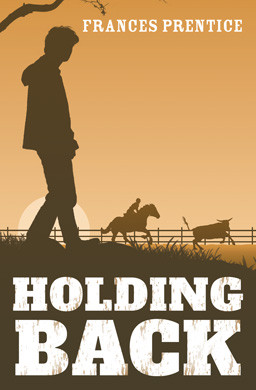
  • Holding Back by Frances Prentice: Homeschooling in Rural Australia

    https://cdn11.bigcommerce.com/s-o4yw47apay/images/stencil/960w/products/367/778/holding-back_med72__12717.1738131690.jpg?c=1

    Holding Back is a YA novella by Frances Prentice that was published by the Australian publisher Rhiza Press. It is available on Kindle (how I got it) and also can be purchased in paperback or audiobook form. I discovered it randomly through online browsing, and when I saw it had a homeschooled character, I thought it would be worth considering for the award.

    This is a very short and simply written book, but the author still manages to tell a sweet story with actually decent homeschooling representation. It follows fifteen-year-old Nick, who lives on a farm in the outback, and whose main purpose in life is campdrafting. As I learned from the book, this is a sport that involves contestants on horseback herding steers through a course. Unlike his sister Kathy, Nick is quiet and awkward. He doesn’t have close friends- until he joins the local swim team. There, he discovers a new passion and forms bonds with his teammates.

    While many of the books this year focus on exceptional circumstances such as boat schooling or agoraphobia, this is realistic fiction about a somewhat more “normal” homeschooler. It is also an example of a non-American homeschooler, and a teen boy main character, both of which are uncommon in fictional portrayals of homeschooling. Nick has a list of assignments from his mom that he works through independently. This seems true to how many homeschooled high schoolers are educated, and similar to my own teenage years. The story touches upon the struggles with finding friends if you have limited access to and time to talk with kids your age, which is very believable in a rural area. However, it also shows how friendships are still possible if you are able to be involved in activities. I think that seeing a character overcome realistic challenges as a homeschooler will be better for real homeschooled kids than the common trope of a completely isolated homeschooler going to school and immediately making best friends.

  • Why Community Colleges Are an Excellent Choice for Homeschoolers

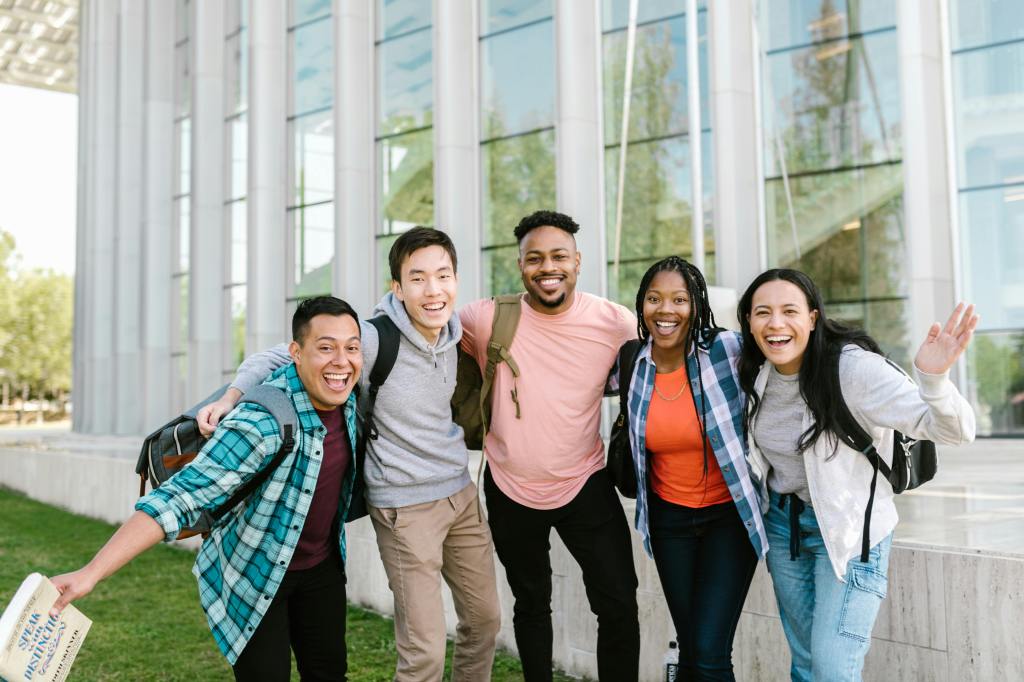
    Photo by RDNE Stock project: https://www.pexels.com/photo/group-of-people-standing-beside-a-building-7683745/

    Author: Steven

    In this article we will be examining why community colleges can be a great fit for both current homeschool students who desire opportunities for college credit via dual enrollment as well as former homeschool students who are past the typical high school age. Despite their at times negative reputation from the general public, community colleges offer several benefits for students who come from a homeschool background. 

    Community colleges offer excellent opportunities for personalized learning.

    Community colleges offer smaller class sizes than one will find at many large universities, especially for entry level courses. This article by Crown Counseling, explains that the average class sizes in community colleges tend to range from 25-35 students, while similar offerings at larger universities can be over 300. Given that most community colleges offer the same introductory (college freshmen and sophomore level) courses that universities do, one can get more out of them by being part of a smaller environment with instructors who are able to connect with each individual, rather than just being one face in a sea of many. 

    Similarly, community colleges also allow for different models for students to take classes, including in-person options during the standard school day timeframe, as well as evening and weekend options. Community colleges also offer plenty of opportunities for online and hybrid (mix of in-person and online) learning, with this article by Sara Weissman of Inside Higher Ed noting that online learning options have remained popular with students even after the Covid-19 pandemic subsided. This can open doors for you to start your college career without having to travel to a physical campus, which can be a major benefit for you depending on your situation. With that being said, if you are someone with a homeschool background who is interested in pursuing collegiate studies I would very strongly encourage you to do at least some of your classes in person. There is an element of connection with instructors and classmates that simply cannot be replicated virtually, and it can be especially helpful in courses in the STEM fields. I am a K-12 homeschool alum myself who earned a bachelors degree completely online and I am now back in school in-person (at a community college) to go into the medical field, so I am speaking from personal experience when I am making this recommendation. 

    Community colleges are significantly more affordable than public or private universities.

    One aspect of community colleges that many people do not realize is how affordable they can be when compared to other higher education options. In this article from the American Association of Community Colleges we find some average annual tuition costs for full-time students at different types of institutions for the 2023-2024 academic year:

    • Public 2-Year Colleges In-District (Community Colleges)-$3,990
    • Public 4-Year Colleges In-State ($11,260)
    • Public 4-Year Colleges Out-of-State ($29,150)
    • Private 4-Year Colleges ($41,450)

    As one can clearly see from this data, community colleges are the most affordable option in higher education by a long shot, especially when compared to going to school out-of-state or going to a private university. I have often suggested to people I know, homeschoolers, public schoolers, and private schoolers, that unless they have rich parents, a full-ride scholarship, or significant money from both scholarships and grants, starting out at a community college will be their best option financially. In addition, many community colleges offer plenty of scholarships and grants, which are financial aid options which you do not have to repay (unlike loans) which can help you fund your education. 

    Community colleges can help you if you come from a unique academic background or if you need remedial courses

    Many community colleges have a policy of open enrollment, which means that they accept anyone with a high school diploma or GED, as this piece by Sarah Wood of US News and World Report explains. Community colleges do not have the same competitive application cycle that other college and universities do, with many of them placing more emphasis on their own placement tests than they do on traditional college readiness standardized tests like the ACT or SAT. For example, if you test into needing to take a remedial math class but you are fine on everything else you can take a remedial math class while also taking college level English and History classes. Also, if your parents did not provide you with a high school transcript or diploma (4-year colleges and universities want both for admission directly from high school) then you will find that many community colleges will have programs to help you earn your GED before moving onto college level coursework. 

    In summary, I believe that community colleges are an excellent option for both former and current homeschoolers to further their education. I am someone who has been a community college student multiple times and I have found the instructors and material in them to be as rigorous and beneficial as in other academic settings. The benefits that they possess on the fronts of accessibility, affordability, and accommodation are significant. Whatever you might want to get out of your higher education journey, I strongly encourage to consider beginning it at your local community college. 

  • Navigating High School: My Advice for Homeschoolers

    Author: Grace

    Photo by Benoît Deschasaux on Unsplash

    As someone who has been out of high school for a few years, I have had time to reflect on my homeschooling experience. Much of it was good, but I definitely could have done better at some things. So, I wanted to share some advice for homeschooled teens.

    1. Make sure you’re prepared for whatever you want to do after high school.

    This is something in which I succeeded. I knew I wanted to go to college (and thankfully my parents supported this), so I completed four years of high school level math, science and writing to be academically prepared. I took SAT prep seriously, because getting the highest score I could would help prove my merit in college applications and make more scholarships available. Extracurriculars such as orchestra and volunteering were also useful. The only thing I regret is not taking any dual enrollment courses. At the time, I was not motivated to do this, but now I see that the practice with time management might have made me more ready for college.

    Before you graduate you should:

    • Make sure your parents are keeping a record of your schoolwork, grades, and extracurricular activities. No matter what you want to do, you should have evidence of your high school education!
    • Look up what the high school graduation requirements are where you live, and what is needed to pursue whatever higher education or training you may want to in the future.
    • Consider taking an SAT/ACT/GED test. I was able to register online to take the SAT at a public school. If you want to go to college, you will very likely need one of these.
    • Consider taking community college courses or something else that will get you experience in a traditional classroom setting.

    2. Learn from various sources

    I am grateful to have had access to the internet and the local library. This helped me expand my knowledge beyond only my assigned homeschool materials. For example, astronomy books I checked out from the library discussed the big bang while my high school textbook didn’t. Everyone has biases, so make sure to explore both sides of issues.

    3. Don’t be too isolated

    I could have done better with this. During the school year, I attended activities 2-3 times a week but never made close friends. More activities may have made friendships easier, but I didn’t know what else was available. I wish I’d been more outgoing and tried to arrange more get-togethers outside of co-op. There were a few families I knew that actually lived in my neighborhood, but I still didn’t go over to their houses very often. It felt awkward, but I wish I’d tried harder.

    It is possible to become isolated as a homeschooler. I’m not stereotyping homeschoolers as weird and unsocialized here; I’m just pointing out that socializing can require more effort when you are not in a traditional school. As a teen, I noticed that my mom never seemed to mind when activities were cancelled, as she was already busy taking care of a large family. I don’t think my mom is an anomaly among homeschooling parents either. During the pandemic, my homeschooled pen pal told me that her mom was happy she couldn’t be late for anything. Because there was nothing to be late for anymore! Stay-at-home parents sometimes just want to stay home, but being a stay-at-home teenager is not ideal. You should have free time to interact with others your age multiple times per week. Looking back now, I see that only one of my activities (co-op) allowed that, and that was only 2-3 times per month. My other activities either only had younger kids (American Heritage Girls) or weren’t meant for socializing (orchestra). I should have had more social time than that, and I should have listened to my feelings of not quite having enough. Advocate for yourself if you ever feel bored or lonely! And if that remember that even if you’re isolated now, you will have more freedom to go out into the world eventually.

    4. Consider your options.

    Plan your future! Research colleges and jobs and find out what it takes to apply. If there is anything in your current life you are unhappy about, you can at least try to find other options. Research extracurricular activities in your area. Some things you could try are libraries, community centers, scouting programs, homeschool groups, youth sports and summer camps. If you have a specific interest in doing something, look it up. If you are interested in switching to traditional school, research schools in your area. Even if you are already partway through high school, it is not too late to try something new if you think it might benefit you. One of my biggest regrets is that I was somewhat passive as a teen and accepted situations that could have been improved to make my decent homeschooling experience even better.

    5. Final Advice

    Finally, if you are struggling with academics or your home life try visiting the Coalition for Responsible Home Education website to find some advice. I just wanted to put this out there because I don’t know what your circumstances are, and I recognize not everyone has supportive parents like I did.

    This is just what I’ve learned based on my personal experiences and research, and hopefully it’s useful to some of you readers. It is important to take advantage of the potential benefits of being homeschooled, while minimizing the potential downsides.