Tag: writing

  • Selah by Liana Richmond: Inside the World of Fundamentalist Homeschooling

    https://m.media-amazon.com/images/S/compressed.photo.goodreads.com/books/1763842806i/244304197.jpg

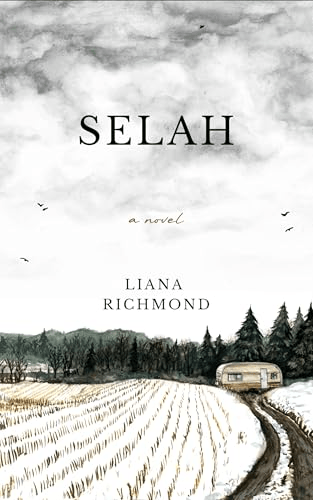
    Selah is a novel by author Liana Richmond, published by Agathos press in 2025. Although the main character is sixteen, there is no indication that it was published as YA, and it seems to be literary fiction geared towards mature readers. Besides simply being a well-written story, Selah will be of special interest to anyone interested in the world of fundamentalist homeschoolers. I have tried to write this review without revealing too much about the plot, so that anyone who is interested can go read Selah’s story for themselves.

    The end shouldn’t hurt me. I would be whisked away to Heaven. The future shouldn’t hurt but it did (5)

    Selah Bowman never expected to grow up. Her parents live in expectation of the imminent Second Coming, having chosen to divest themselves of worldly things. Since even small-town Ohio is deemed too worldly, Selah and her sister Chalice are kept in a tightly controlled bubble. They are homeschooled and faithfully attend their independent Baptist church. Any outside ideas or activities are heavily scrutinized and liable to being withheld at their father’s disapproval. And their father always has the final say as head of the household. Selah’s somewhat lonely existence is haunted by visions of the final judgement, and even mythical creatures that do not belong in her Christian worldview. She finds solace in art until her parents discover her notebooks filled with anatomical drawings. Shocked and horrified, they are desperate to fix whatever led their daughter astray from their rules. So begins the end of Selah’s sheltered childhood. Soon, she will be forced to question her beliefs and the only life she has known. It will be the hardest thing she has ever done, but necessary to save herself.

    I will warn readers that Selah’s story not always easy to read. There are themes of anxiety, abuse, misogyny and even sexual assault, all mixed in with the many harmful beliefs held by the characters. Selah an abused, manipulated, psychologically disturbed girl who is forced to take on adult responsibilities before she is even eighteen. However, it is ultimately inspiring to follow along with her journey and see her gain her freedom. Liana Richmond is a talented writer. I enjoyed reading her vivid descriptions of the setting, like the woods Selah loves to visit. Richmond also excels at character development. Selah is a complex character with many musings about religion and the world. The people surrounding her are also multifaceted. Even her father is not a one-dimensional villain and genuinely wishes to protect his daughters in his own misguided way. There is also some nuance in the discussion of religion. It is shown that Christianity is not only fundamentalism, and Selah makes the personal decision to hold onto her faith despite suffering.

    The homeschooling representation is what initially drew me to this book. I would not say that Selah represents all homeschoolers, but I would say that it does an excellent job at representing some specific homeschoolers. The author herself is a “second-gen homeschooler” according to her Substack, which gives her credibility. The everyday scenes of Selah and Chalice completing their schoolwork remind me of my high school life even though I was not raised fundamentalist. Ironically, despite their misogynistic upbringing and parents’ confidence that the world is ending, the Bowman girls are still decently educated. Selah studies physics, algebra and classical literature right up until she quits schoolwork altogether. It is this homeschooling combined with fundamentalism that leads to Selah’s very plausible negative experiences. Families like ones in the book do exist, as you will know if you are from one yourself, or have done any reading on the “Quiverfull “movement. I think that for this reason, Selah deserves serious consideration for the Homeschooled Voices Book Award. Homeschoolers from fundamentalist subcultures may see themselves in these pages, and others can develop better empathy and understanding for them. Furthermore, some parts of Selah may have broader relatability. Dealing with doubts and anxiety about the future is a common experience for many teens. Regardless of your background, I would say that Selah is a fascinating novel well worth reading.

  • Why Community Colleges Are an Excellent Choice for Homeschoolers

    Photo by RDNE Stock project: https://www.pexels.com/photo/group-of-people-standing-beside-a-building-7683745/

    Author: Steven

    In this article we will be examining why community colleges can be a great fit for both current homeschool students who desire opportunities for college credit via dual enrollment as well as former homeschool students who are past the typical high school age. Despite their at times negative reputation from the general public, community colleges offer several benefits for students who come from a homeschool background. 

    Community colleges offer excellent opportunities for personalized learning.

    Community colleges offer smaller class sizes than one will find at many large universities, especially for entry level courses. This article by Crown Counseling, explains that the average class sizes in community colleges tend to range from 25-35 students, while similar offerings at larger universities can be over 300. Given that most community colleges offer the same introductory (college freshmen and sophomore level) courses that universities do, one can get more out of them by being part of a smaller environment with instructors who are able to connect with each individual, rather than just being one face in a sea of many. 

    Similarly, community colleges also allow for different models for students to take classes, including in-person options during the standard school day timeframe, as well as evening and weekend options. Community colleges also offer plenty of opportunities for online and hybrid (mix of in-person and online) learning, with this article by Sara Weissman of Inside Higher Ed noting that online learning options have remained popular with students even after the Covid-19 pandemic subsided. This can open doors for you to start your college career without having to travel to a physical campus, which can be a major benefit for you depending on your situation. With that being said, if you are someone with a homeschool background who is interested in pursuing collegiate studies I would very strongly encourage you to do at least some of your classes in person. There is an element of connection with instructors and classmates that simply cannot be replicated virtually, and it can be especially helpful in courses in the STEM fields. I am a K-12 homeschool alum myself who earned a bachelors degree completely online and I am now back in school in-person (at a community college) to go into the medical field, so I am speaking from personal experience when I am making this recommendation. 

    Community colleges are significantly more affordable than public or private universities.

    One aspect of community colleges that many people do not realize is how affordable they can be when compared to other higher education options. In this article from the American Association of Community Colleges we find some average annual tuition costs for full-time students at different types of institutions for the 2023-2024 academic year:

    • Public 2-Year Colleges In-District (Community Colleges)-$3,990
    • Public 4-Year Colleges In-State ($11,260)
    • Public 4-Year Colleges Out-of-State ($29,150)
    • Private 4-Year Colleges ($41,450)

    As one can clearly see from this data, community colleges are the most affordable option in higher education by a long shot, especially when compared to going to school out-of-state or going to a private university. I have often suggested to people I know, homeschoolers, public schoolers, and private schoolers, that unless they have rich parents, a full-ride scholarship, or significant money from both scholarships and grants, starting out at a community college will be their best option financially. In addition, many community colleges offer plenty of scholarships and grants, which are financial aid options which you do not have to repay (unlike loans) which can help you fund your education. 

    Community colleges can help you if you come from a unique academic background or if you need remedial courses

    Many community colleges have a policy of open enrollment, which means that they accept anyone with a high school diploma or GED, as this piece by Sarah Wood of US News and World Report explains. Community colleges do not have the same competitive application cycle that other college and universities do, with many of them placing more emphasis on their own placement tests than they do on traditional college readiness standardized tests like the ACT or SAT. For example, if you test into needing to take a remedial math class but you are fine on everything else you can take a remedial math class while also taking college level English and History classes. Also, if your parents did not provide you with a high school transcript or diploma (4-year colleges and universities want both for admission directly from high school) then you will find that many community colleges will have programs to help you earn your GED before moving onto college level coursework. 

    In summary, I believe that community colleges are an excellent option for both former and current homeschoolers to further their education. I am someone who has been a community college student multiple times and I have found the instructors and material in them to be as rigorous and beneficial as in other academic settings. The benefits that they possess on the fronts of accessibility, affordability, and accommodation are significant. Whatever you might want to get out of your higher education journey, I strongly encourage to consider beginning it at your local community college.